
The traditional role of Latin America’s coasts and oceans is undergoing a radical change. What has historically been managed through a purely extractivist approach is giving way to a regenerative model that demonstrates that environmental protection and social development are not mutually exclusive concepts.
The FUNDES team, in collaboration with strategic partners including Fundación Coppel, the Center for Marine Biodiversity and Conservation (CBMC), and C-Minds, hosted this week’s webinar, Blue Economy and Marine Prosperity Areas. This meeting made it clear that the future of coastal communities depends on a delicate balance between technological innovation, local empowerment, and economic sustainability.
Below, we share the main themes discussed by the expert speakers during the event.
1. The Marine Prosperity Zones Model: Flexibility and Multi-Stakeholder Governance
Karla Puerta, Project Manager for FUNDES in Mexico, highlighted the nature of the project, which originated in the Gulf of California and can be replicated in other ecosystems and regions of Latin America thanks to its multi-stakeholder and multi-level governance approach, ensuring that the initiative does not depend on a single governing body.
This makes it possible to recognize the asymmetries and unique characteristics of each marine and coastal area, thereby ensuring that decision-making is distributed equitably.
2. The community as the focal point of the program
For any sustainability initiative to move beyond the page, the region must be empowered by one essential ingredient: trust. Rural and coastal communities often express legitimate frustration with projects that arrive with grand, short-term promises and end up disappearing unexpectedly, without leaving behind any infrastructure.
- The historical memory of the territory: It is crucial to map out the community’s background and past experiences before taking action.
- Social license: This is understood as the direct endorsement granted by local residents. Without this empathetic and supportive endorsement, the chances of success are minimal.
- Long-term sustainability: Trust is renewed day by day by respecting internal dynamics, recognizing natural leaders, maintaining open and transparent communication about expectations, and strictly adhering to agreements.
3. Redefining Success: Co-Constructed Indicators and the Entrepreneurial Approach
América Ávalos, Manager of Education and Family Philanthropy at the Coppel Foundation, emphasized a shift in perspective regarding impact measurement. From the perspective of social and philanthropic investment, success should not be dictated by large organizations or development banks, but rather co-created and co-designed together with the beneficiaries.
From this comprehensive and holistic perspective, well-being encompasses three critical dimensions: social, economic, and environmental. Supporting coastal MSMEs serves as a key driver of social transformation. However, for this sector to thrive, it is vital to support local producers through a people-centered process of formalization so that they can begin to fully embrace their roles as entrepreneurs and recognize the value and impact they generate in their communities.
4. Artificial Intelligence and Data: Democratizing Ocean Knowledge
One of the most disruptive and innovative elements presented in the webinar was the role of technological tools in streamlining marine protection. Alex Muñoz, Director of Vital Oceans at C-Minds, explained how the generative artificial intelligence platform being developed within his organization is breaking technical paradigms by addressing three long-standing bottlenecks:
- Democratization of information: It integrates complex scientific data, publications, and satellite maps into a report synthesized in just a few minutes—a task that previously required months of field research. This levels the playing field so that communities can make informed decisions about their territories.
- Direct Financing: Aims to establish financial mechanisms that connect global direct capital with community-based organizations in a streamlined manner, eliminating slow institutional intermediaries.
- Mediation and Agreement Mechanism: The platform uses AI to bridge opposing positions within the same locality (for example, between the fishing industry and tour operators) based on sound scientific principles, prioritizing the protection of highly vulnerable critical ecosystems such as mangroves, coral reefs, and kelp forests.
5. The Conservation Leadership Program (PLC): Success Stories
Valentina Platzgomer, Co-Director of Strategic Alliances and Scientific Diplomacy at the CBMC, explained that the new generations’ connection to the land is the true driving force behind conservation today. When young people are given methodological tools, they are not forced to migrate in search of opportunities outside their coastal communities.
Through the Conservation Leadership Program, real-life examples were presented of young people who are transforming their communities with disruptive, impact-driven business ideas:
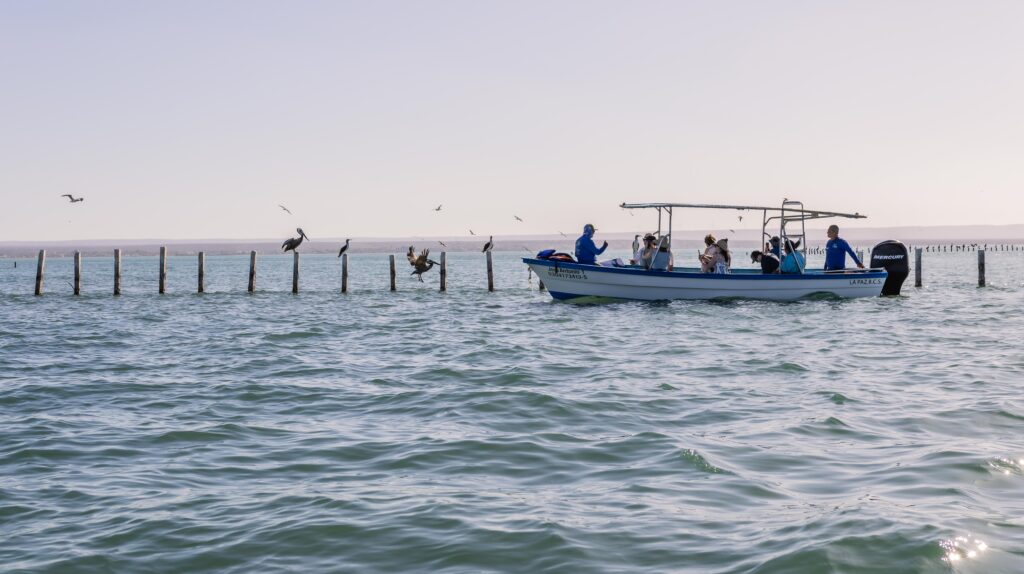
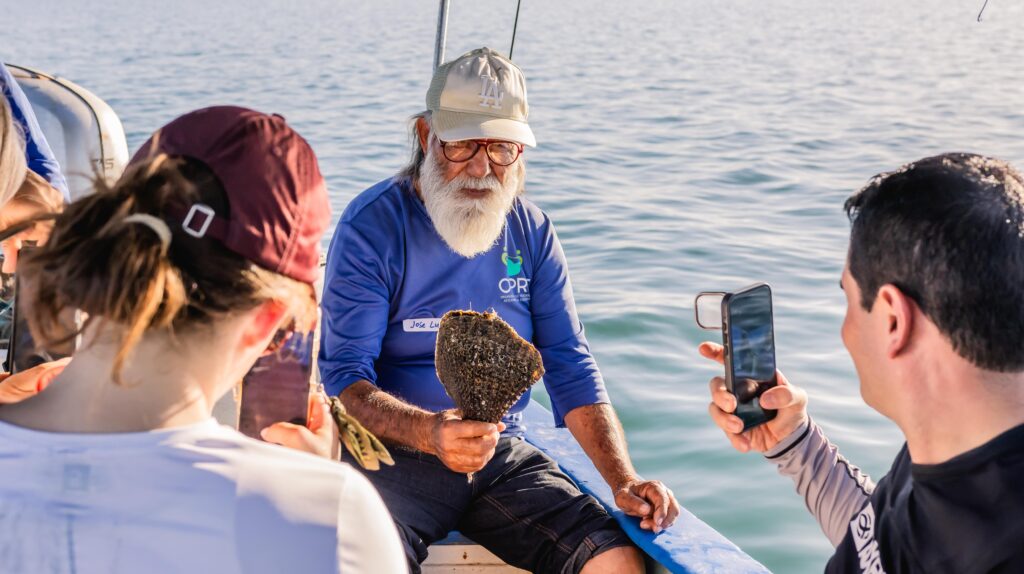
- Brianda Taylor (El Sargento, Baja California Sur): She is independently building her own panga, “La Sirena Chollera, ” with a focus on local ecotourism guiding under strict ethical practices and workshops specifically aimed at empowering women in a historically male-dominated sector.
- Yair (Mazatlán, Sinaloa): The son of fishermen who, after witnessing firsthand the damage caused by red tide events that prevented his family from working, decided to study harmful algal blooms scientifically in order to predict and mitigate them locally.
- María de la Cruz (San Blas, Nayarit): A park ranger dedicated to protecting the mangroves and birdlife in her region. It leads collective action initiatives to ensure that local tourism service providers actively participate in institutional tools for territorial planning, such as the Local Ecological Zoning Plan (POEL).
Conclusion: A Wave of Sustainability for the Region
The regenerative Blue Economy does not seek to ban productive activities, but rather to correct the traditional extractive approach. The goal is clear: to foster a healthy ocean where all sectors—public, private, philanthropic, and civil society—work together toward a common goal, recognizing that marine protection is the only guarantee of lasting economic prosperity for Latin America and the Caribbean.
Would you like to learn more about the technical details or get directly involved in the projects? Write to the team directly through their official channel: [email protected].